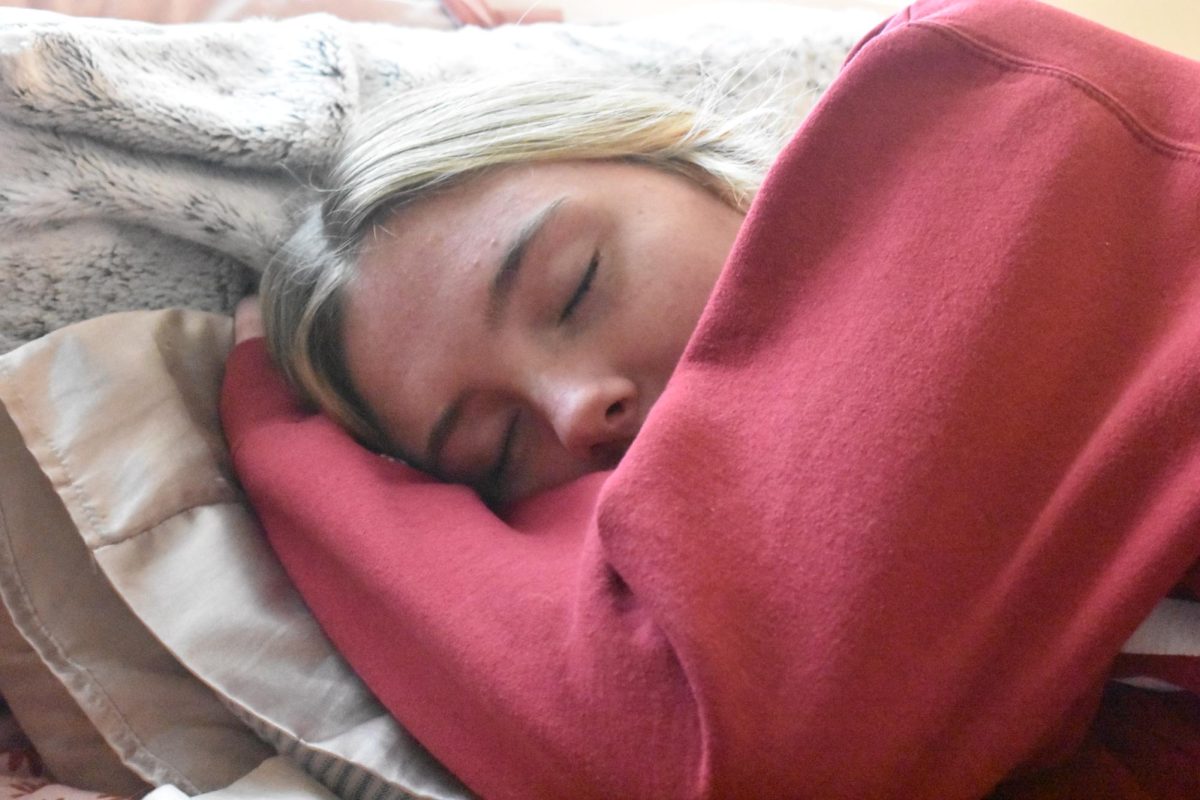
A door creaks open as a student stumbles into his living room and crashes on his couch, slinging his bag on the floor and planning to take a very, very short nap. Five hours later he wakes up, and his sleep schedule is ruined, but oh did it feel amazing.
Many students find themselves taking these after school naps because they are essential tools for a successful year.
Most students lack the ability to keep their napping time reasonable, so it would be in their best interest to set an alarm if they do not want to ruin their sleep schedule. But personally, naps can make me feel tired and discombobulated. This happens when someone sleeps for too long and their body falls into deep sleep. Sleeping for over an hour during a nap has been linked to grogginess, disrupted nighttime sleep, and an increased risk of cardiovascular disease.
This can be solved if students set alarms and plan to take naps at a set time every day. For the optimal recovery and benefits, nap for 10 minutes to at most an hour, before 4 p.m. according to sleep experts. It has also been proven that naps boost athletic performance by providing more power, an increase in speed, more stamina, and less fatigue, which is useful, considering I can get faster by napping while waiting for my track events.
After school naps also boost students’ abilities to do homework. Naps provide boosted memory, enhanced alertness, concentration, boosted problem solving skills, and creativity, which is essential for doing hours of English homework, complex math problems, or an artistic masterpiece. Personally, an after-school nap is the burst I need to stop procrastinating and actually get my work done.
In my opinion, taking naps after school is really beneficial and can help regenerate my energy levels after school destroys them. After-school naps are an essential form of self care and are needed if someone wants to do hours of homework or is planning to attend after-school sporting events.