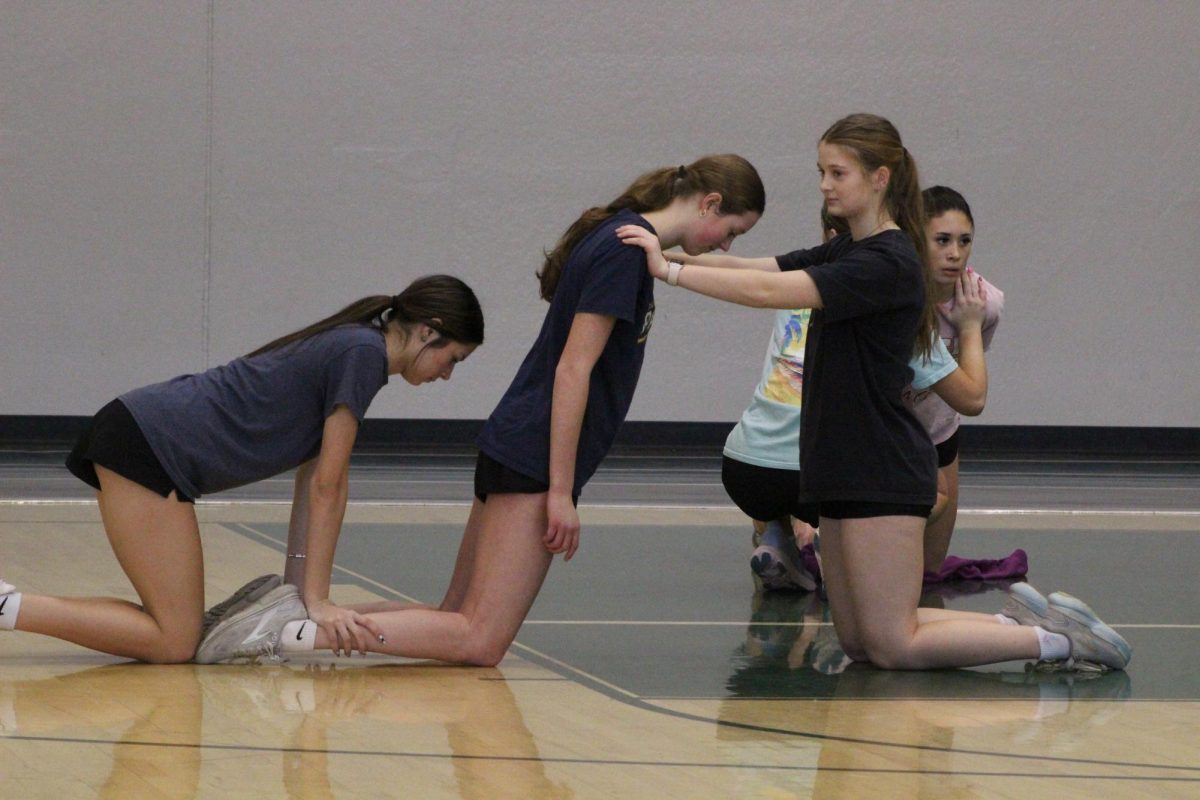
Track season is off to a fast start with official practices beginning in mid February, and the first meet taking place just a week from now.
With such a rapid turnaround to their first meet, track athletes must utilize the off-season and pre-season to get ready for competition
“During the off-season, I’ve been running a lot and trying to recover well, just feeling my body and knowing what I need to be doing for this upcoming season. Open facilities and pre-season work for me consists of sprint work as well as getting active recovery days where I get mileage on my legs,” sophomore Lucy Galbraith said. “I run distance and my favorite event is the 4×800 meter relay. I think the team aspect is very encouraging, and my goals for this season are just to improve as much as I can and not take anything for granted.”
While runners take to the track during open facilities, throwers condition their bodies in the weight room and get practice throwing on the football field.
“Open facility practices are a chance for us to get a head-start on our season. We’re allowed to meet twice a week and can pretty much have full practices. With the throwers, we are a little bit limited because of the winter weather, but if we can get outside, we usually just throw on the turf. On days we are stuck inside, we use the weight room or the SAC to work on our technique,” Coach Blaine Williams said.
Athletes have different ways of preparing for their season, including seniors who are participating in their last dance.
“This season I’m excited to PR in all my races and compete at a high level as well as hopefully being a good leader. To achieve these things, I ran cross country in the fall and also do cross-fit for cardio which keeps me in shape year-round. I’ve also been taking our open-facilities seriously which consist of lots of longer distances and endurance work, which helps for my 400 time,” senior Grady Havens said.
Some athletes compete in track and field to improve their speed for other sports.
“I’m doing track mainly for soccer and to get faster for soccer, but I also plan to do pole vault so I’m excited for that. I’ve done track for two years now since 7th grade, and in the past I ran the 800 and did longer distances, but I more recently switched to sprints and will mainly run the 100 and pole vault just because I think it will translate to soccer better. Because this is my year sprinting, I don’t have high expectations for the season other than to see myself improve and get better times throughout the season,” freshman Archer Wilkings said.
With the season starting so soon, Coach Williams stresses the importance of acting with haste and intent.
“I stress to the team that our season goes by so quickly. By the time we start practice, the first indoor meet is less than three weeks away, so I think it’s important that everybody understands that we don’t have a ton of time to ease into the season. We have to practice with the intention that we compete really soon and need to be ready,” Coach Williams said.
Indoor track season and IHSAA outdoor season are two separate entities with the HSR indoor track meets taking place on Friday nights at the UIndy ARC Dome.
“Indiana doesn’t have an official indoor season, but we do have the Hoosier State Relays, which is the unofficial indoor state meet. It’s sponsored by our track coaches association and is a good opportunity for kids to get to run/throw/jump against high-level competition that we might see down the road. We will go to three indoor meets where athletes can qualify for the HSR finals, which is on March 28. The indoor meet is a lot different from the outdoor meet because an indoor track is only 200 meters compared to the 400 meter track outdoors. There is only one event each for sprints, hurdles, and distance, and the rest of the track events are relays. Also, we can’t throw discus inside. It’s a smaller meet program but with different events that we don’t get to have once the outdoor season starts,” Coach Williams said.